ServicesPool Drain and Refill
Pool Drain and Refill in Apache Junction
Old pool water wears out. Calcium and dissolved solids build up until chemicals stop working and scale coats your tile and equipment. We drain the pool safely, clean the empty shell and balance the fresh water so it stays clear with less effort.
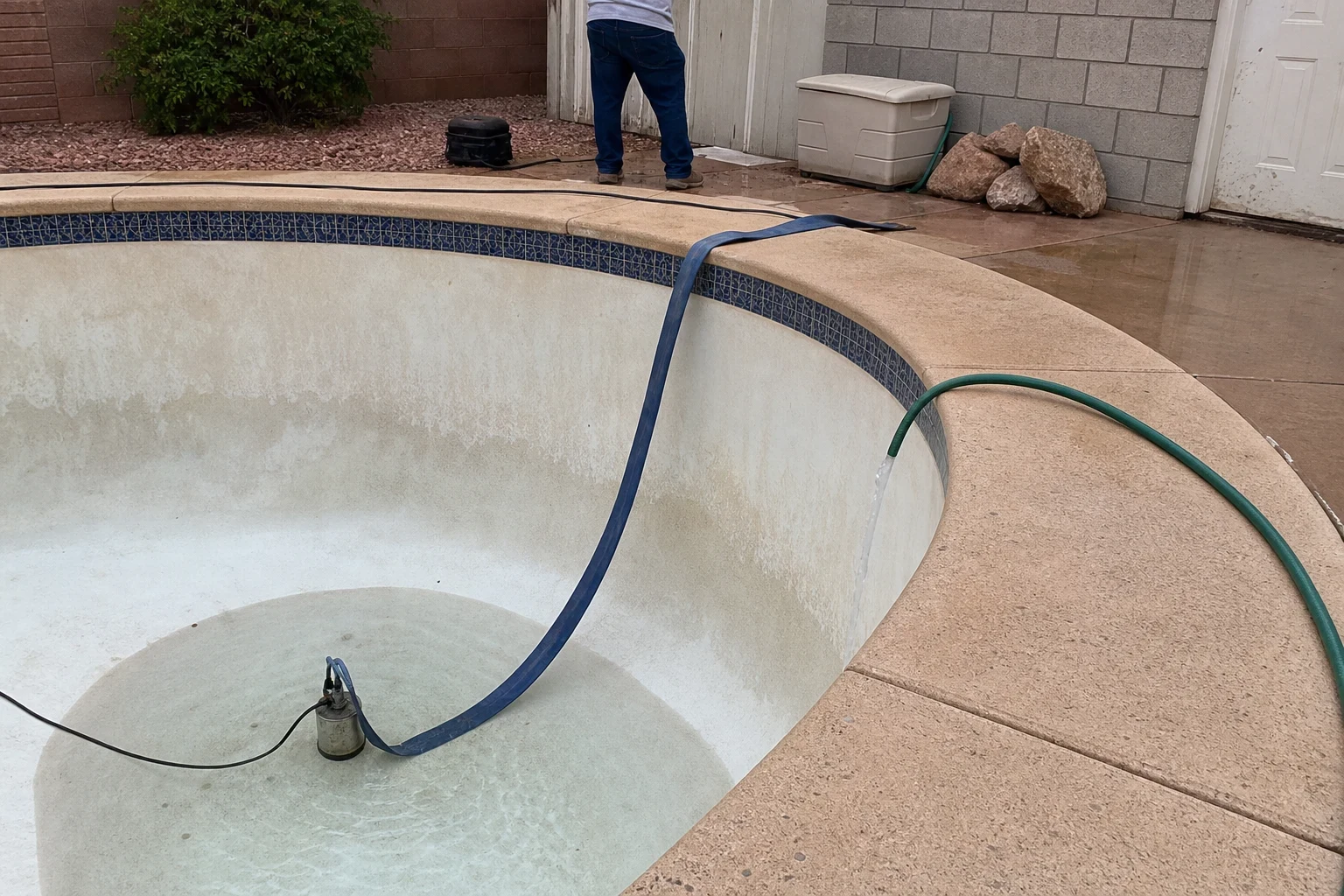
Why pool water needs replacing
Every week, the sun pulls water out of your pool and leaves the minerals behind. You top it off with hard tap water, and the cycle repeats. After a few years the calcium hardness and total dissolved solids (TDS) climb so high that no amount of chemicals will bring the water back into balance.
At that point you are paying for chlorine that does less work, and scale is forming on your tile line, your salt cell and inside your heater. Scale on a heat exchanger makes it run longer to warm the same water. A drain and refill resets all of that. Fresh water takes chlorine better, holds its balance longer and is easier on the equipment that runs your pool.
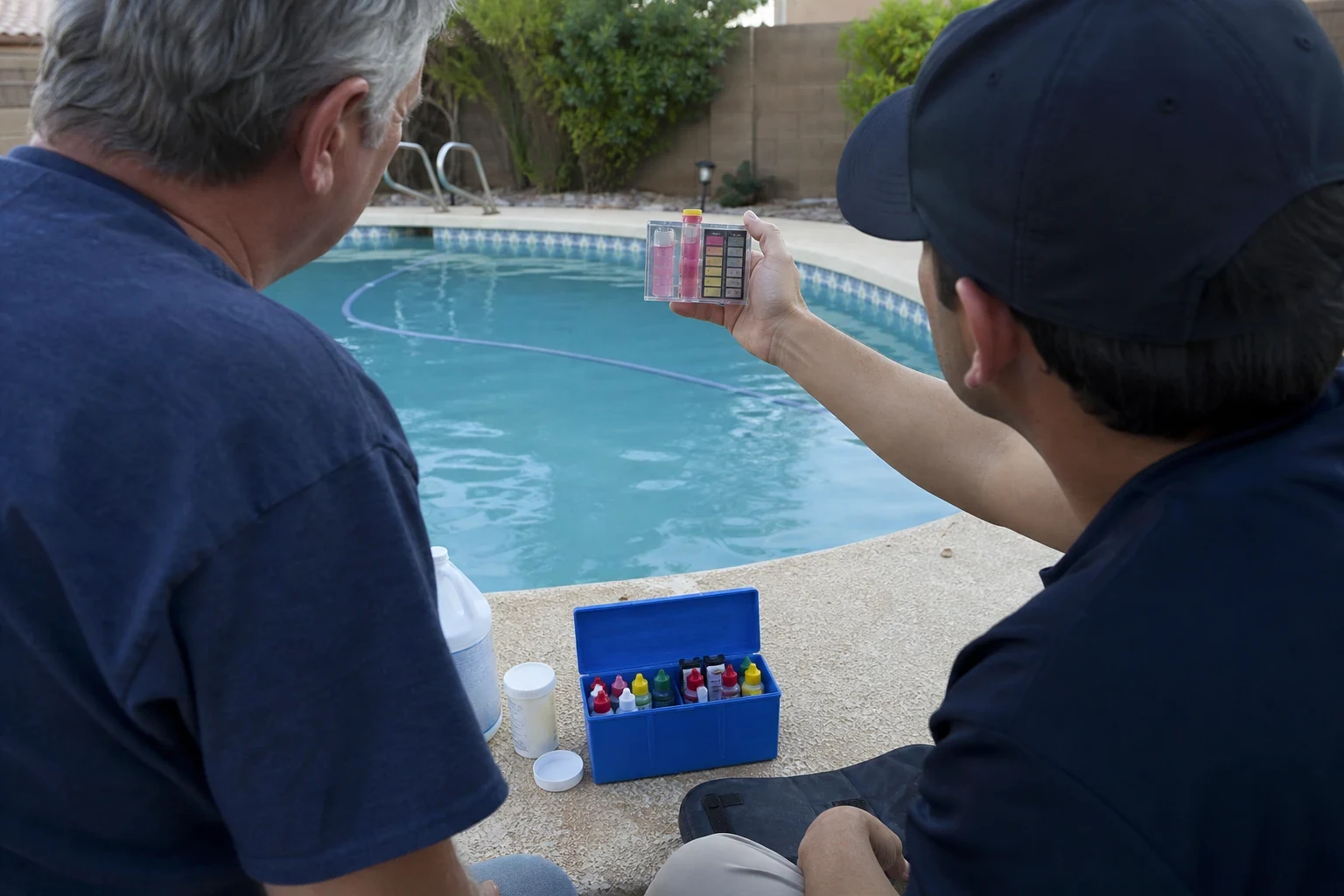
We test first. If your numbers say the water still has life in it, we tell you so and you keep your money.
What a drain and refill includes
- Water testing before we start
- We check calcium hardness, TDS and the rest of your chemistry. The numbers decide whether draining makes sense, not a calendar.
- Controlled draining
- We use a submersible pump and route the water where local rules allow, which is often the sewer cleanout at your home. We watch the pump the whole time so the water goes where it should.
- Hydrostatic valve check
- Many plaster pools have a relief valve in the main drain that lets ground water in instead of pushing the shell up. We open it while the pool is empty and close it before the fill.
- Cleaning the empty shell
- With the water out, we clear debris from the floor and drains and give the surface a scrub. If the plaster is stained, this is the best time for an acid wash, and we can price both together.
- Careful refill
- We wrap the hose end so it does not scratch the plaster and keep the fill moving so the shell is not left bare in the sun.
- Startup chemistry
- Fresh tap water is not ready to swim in. We balance pH, alkalinity, calcium and stabilizer, then add chlorine so the water starts clean.
Signs your pool is due for fresh water
Chemicals stop working
You add chlorine and acid on schedule, but the readings drift right back. High TDS is usually the reason.
White crust at the waterline
Calcium scale on the tile comes back fast after cleaning. The water is carrying more mineral than it can hold.
Cloudy water with good readings
If the chlorine and pH look fine and the water still looks dull, the dissolved solids are often too high.
Scaled salt cell or heater
Crusty plates in the salt cell or a heater that takes longer to warm up point to hard water. Replacing the water slows the damage.
It has been several years
In hard-water areas, most pools need new water every few years. If you cannot remember the last drain, it is worth a test.
What sets the price
Every pool is a little different, so we quote after we test the water and see the setup. The quote covers our labor and the startup chemicals. Your water company bills you for the refill water separately.
Pool size
More gallons means longer pumping, a longer fill and more startup chemicals.
Where the water can go
A cleanout close to the pool is simple. A long run of hose or tight access around your home adds time.
Shell condition
Heavy staining or scale may call for an acid wash or tile cleaning while the pool is empty. We list that as its own line so you can decide.
Startup needs
Some water needs more stabilizer or calcium adjustment than others. A salt pool also needs salt added back after the fill.
How the job day runs
- 1
Test and plan
We test your water, look at the shell and find the right drain point at your home. You get a clear quote by phone before any work is booked.
- 2
Pick a cool day
We schedule drains for the cooler months when we can. Summer sun on an empty plaster pool can crack or craze the surface.
- 3
Drain and clean
The pool drains over several hours. Once it is empty, we open the relief valve, clean the shell and handle any acid wash you chose.
- 4
Refill
Refilling with a garden hose takes most of a day, sometimes longer for a big pool. The water runs through your home's meter, so it shows up on your water bill.
- 5
Balance and hand off
We bring the chemistry into range, start your equipment and walk you through what to expect over the next few days.
Drain and refill questions
How often should I drain my pool?
Around here, most pools need it every few years because of hard tap water and steady evaporation. The better answer comes from a test. When calcium and TDS get too high to manage, it is time.
Can my pool float out of the ground if it is empty?
It can happen when ground water pushes up on an empty shell. It is rare in dry soil, but we take it seriously. We open the hydrostatic relief valve and keep the pool empty only as long as the work needs.
Can I drain it myself?
You can, but a few things go wrong easily. Water sent to the street can break local rules, a pool left empty in the heat can crack, and fresh water started without balancing can stain new plaster. We handle those steps so you do not have to.
How long will my pool be out of use?
Usually two to three days from start to swimming. Draining and cleaning take the first day, the fill takes about a day, and the chemistry needs a little time to settle.
Should I do an acid wash at the same time?
If your plaster is stained or dull, yes. The pool has to be empty for an acid wash anyway, so pairing them saves a second drain. If the surface looks good, we will tell you to skip it.
Find out if your water is worn out
We will test your water and tell you straight whether a drain and refill will help. If it will, you get a clear quote by phone with the startup chemistry included.