ServicesEquipment Installation
Pool Equipment Installation in Apache Junction
We install pumps, filters, heaters, salt systems and automation at your home. We size each piece to your pool and plumbing, set the run schedule and show you how it works. The goal is clean water with less time on the pump.
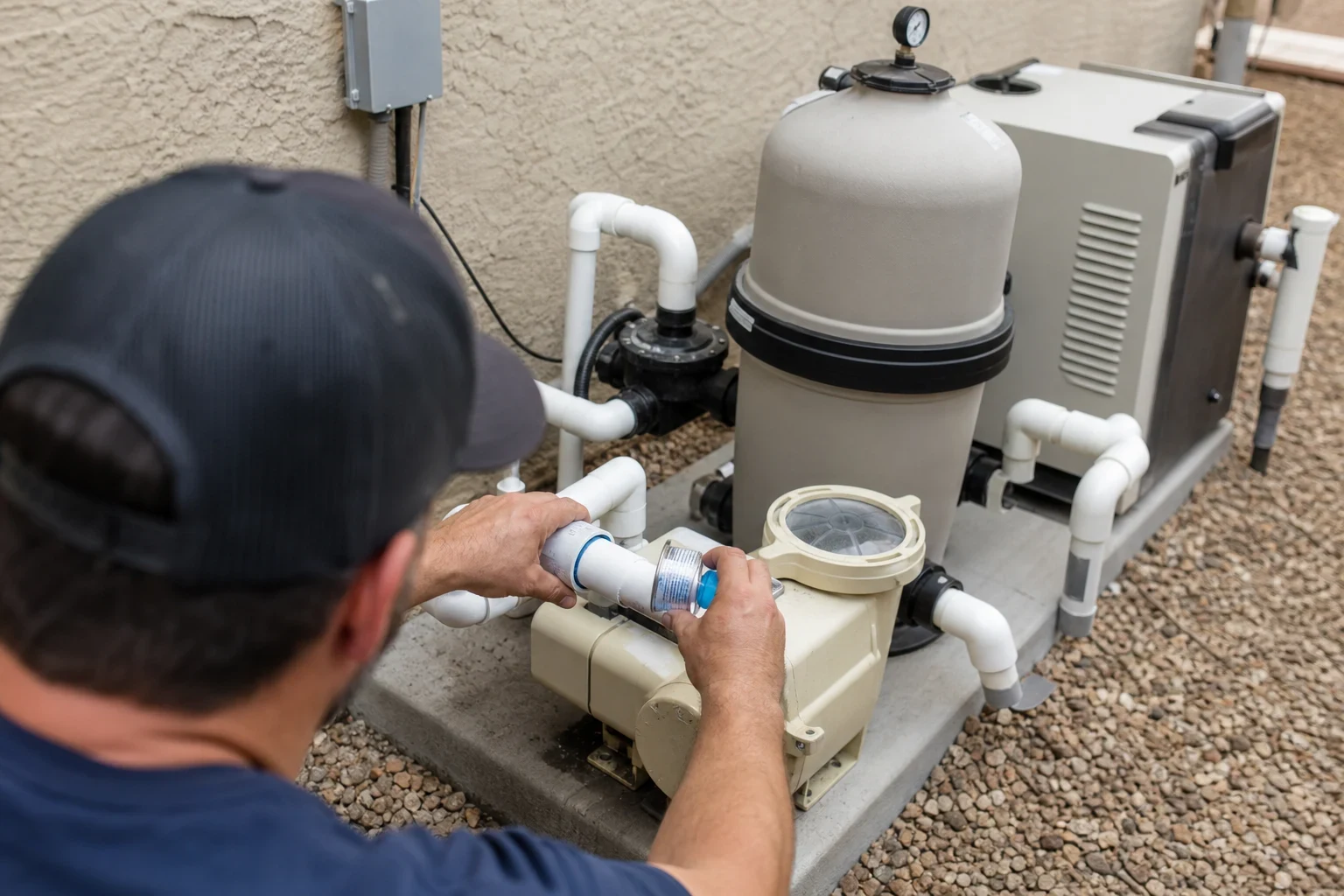
New Equipment, Set Up to Run Less
Your pump is usually the biggest power user on the property after the air conditioner. An old single-speed pump runs at full speed every minute it is on. A variable-speed pump can turn the same water at low speed for most of the day and use a fraction of the power. That is where most of the savings come from.
We replace worn equipment and upgrade setups that cost too much to run. We also fix installs that were never sized right, like a big pump pushing water through a small filter. If a part can be repaired instead, our pool repair work covers that, and we will tell you which way makes more sense.
What We Install
Variable-speed pumps
We match the pump to your pool volume, pipe size and filter. Then we program speeds for filtering, cleaning and skimming so it is not running hard when it does not need to.
Filters
Cartridge, sand or DE, sized so water moves through easily. A filter that is too small makes the pump work harder and clogs faster.
Heaters and heat pumps
We install gas heaters and electric heat pumps. A heat pump costs more up front but usually costs less to run for steady spring and fall swimming.
Salt chlorine generators
A salt cell makes chlorine from salt in the water. We wire it to run with the pump and set the output for your pool size.
Timers and automation
Automation lets you set pump speeds, heater times and lights on a schedule. Fewer wasted hours means a lower bill.
Plumbing and valves at the pad
We replumb what the new equipment needs, using fresh fittings and valves. Fewer sharp turns in the pipe means less work for the pump.
Signs Your Pool Equipment Is Due
The pump is loud or hot
Screeching or grinding usually means worn motor bearings. A motor that is hot to the touch is working too hard and may not last much longer.
Your power bill jumps in summer
Long summer run times show up fast on a single-speed pump. A variable-speed pump is often the fix that pays you back.
The filter clogs fast
If pressure climbs a few days after cleaning, the filter may be too small for the pump. After monsoon dust storms this gets worse.
Constant repairs
When the same pump or heater needs a part every season, replacing it can cost less over time than another repair.
Cloudy water that will not clear
Weak circulation leaves dead spots where algae starts. Good chemistry cannot make up for water that is not moving.
How an Install Goes
- 1
Look at the pad
We check your current equipment, pipe size, electrical and pool volume. You get a written quote that lists each part and the labor.
- 2
Pick the right size
We explain the options in plain terms, including what each one costs to run. Bigger is not better if it wastes power.
- 3
Install day
We shut off power, remove the old equipment and plumb in the new. Most single-piece swaps are done in one visit. Where the work needs a permit, we pull it.
- 4
Start-up and settings
We prime the pump, check for drips at every fitting and set the speeds and schedule. Then we walk you through the controls and haul away the old parts.
What Moves the Price
Every pad is different, so we quote after we see yours. The cost comes down to what you are installing and how much work it takes to fit it in. We put it all in writing before any work starts.
- Type of equipment
- A pump swap costs less than a heater or a full automation system. Higher-efficiency models cost more up front and less to run.
- Plumbing changes
- If the new equipment needs different pipe sizes or new valves, that adds parts and time.
- Electrical and gas work
- New wiring, a new breaker or a gas line for a heater can add to the job. Some of this also needs a permit.
- Condition of the pad
- Cracked fittings, old valves or a crowded pad can mean extra work to get everything fitting right.
Equipment Installation Questions
Something not covered here? (480) 672-6040
Will a variable-speed pump really lower my bill?
In most cases, yes. Running a pump at low speed for longer uses much less power than running it at full speed for fewer hours. How much you save depends on your old pump and how long it ran. We can walk through your setup when we look at it.
Can I keep my old filter with a new pump?
Sometimes. If the filter is in good shape and sized right for the new pump, we will leave it. If it is too small or worn out, we will tell you and explain why.
Do I need a heater in this climate?
Many people here swim fine without one from late spring to early fall. A heater or heat pump stretches the season. If you only want a few extra weeks, a heat pump is usually the cheaper one to run.
How long does an install take?
A pump or filter swap is usually done in one visit. Heaters, salt systems and automation can take longer, especially if wiring or gas work is involved. We will give you a time estimate with the quote.
Should I switch to a salt system?
Salt systems make chlorine for you and many owners like the softer feel of the water. The cell needs cleaning and eventually replacing. We will lay out the upkeep so you can decide.
Get a Straight Answer on Your Equipment
Tell us what you have and what is bothering you. We will come look at the pad and give you a written quote with options that make sense for your pool.