ServicesFilter Cleaning
Pool Filter Cleaning in Apache Junction
A clogged filter makes your pump push harder, run longer and still leave cloudy water. We break down your cartridge, DE or sand filter, clean it right, check every part, and put it back together so the water flows easy again.
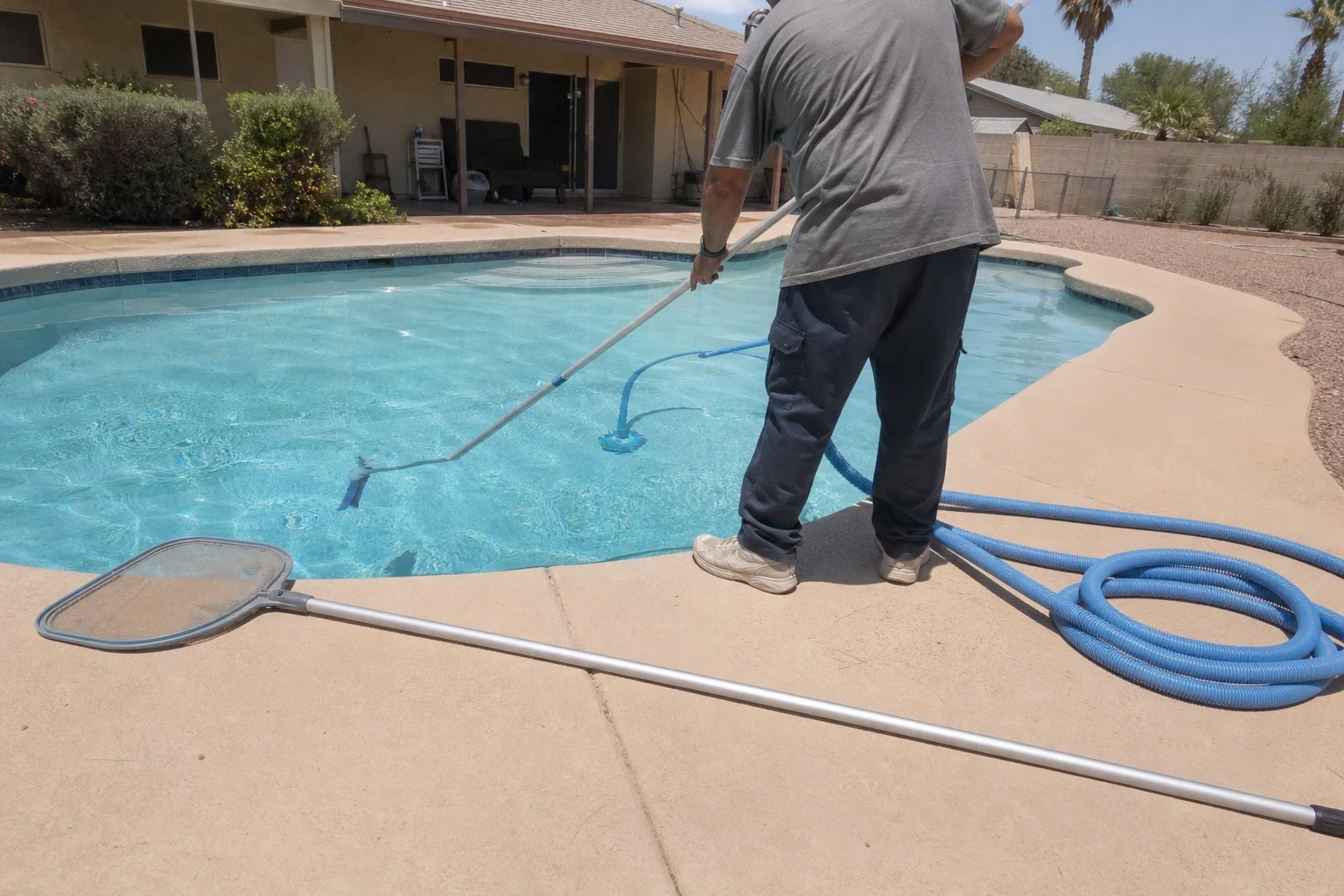
What Filter Cleaning Does for Your Pool
Your filter catches dirt, pollen, sunscreen oil, hair and the fine dust that blows into every backyard pool. Over time that stuff packs into the pleats, grids or sand bed. Water has a harder time getting through. Pressure climbs, flow drops, and the pump strains to move the same water.
A real filter cleaning is more than a hose rinse. We open the tank, pull the media, and clean it down to the fibers or grains. Then we look at the O-rings, the pressure gauge and the air relief valve before we button it up.
The payoff is simple. Clean media lets water move with less effort. That usually means clearer water, shorter run times to get the job done, and less wear on the pump motor.
What a Filter Cleaning Covers
Deep cleaning cartridges
Each cartridge comes out and every pleat gets hosed from the inside out. When oils and scale have built up, we soak the cartridges in filter cleaner so the fabric can pass water again. A hose by itself leaves that film in place.
Taking apart DE grids
We open the DE filter, wash every grid and check for tears or a cracked manifold. After reassembly we recharge it with the correct amount of fresh DE powder.
Checking sand filters
Sand filters are backwashed and the sand bed is inspected. Clumped or channeled sand isn't filtering, and we will let you know if it needs changing.
Checking the O-ring and lid
We clean and lube the tank O-ring and check it for flat spots or cracks. A bad O-ring lets the filter pull air or leak, and it is a simple fix while the tank is open.
Recording a clean pressure reading
Once it is clean, we start the system and write down the pressure. That number tells you when the filter needs attention again.
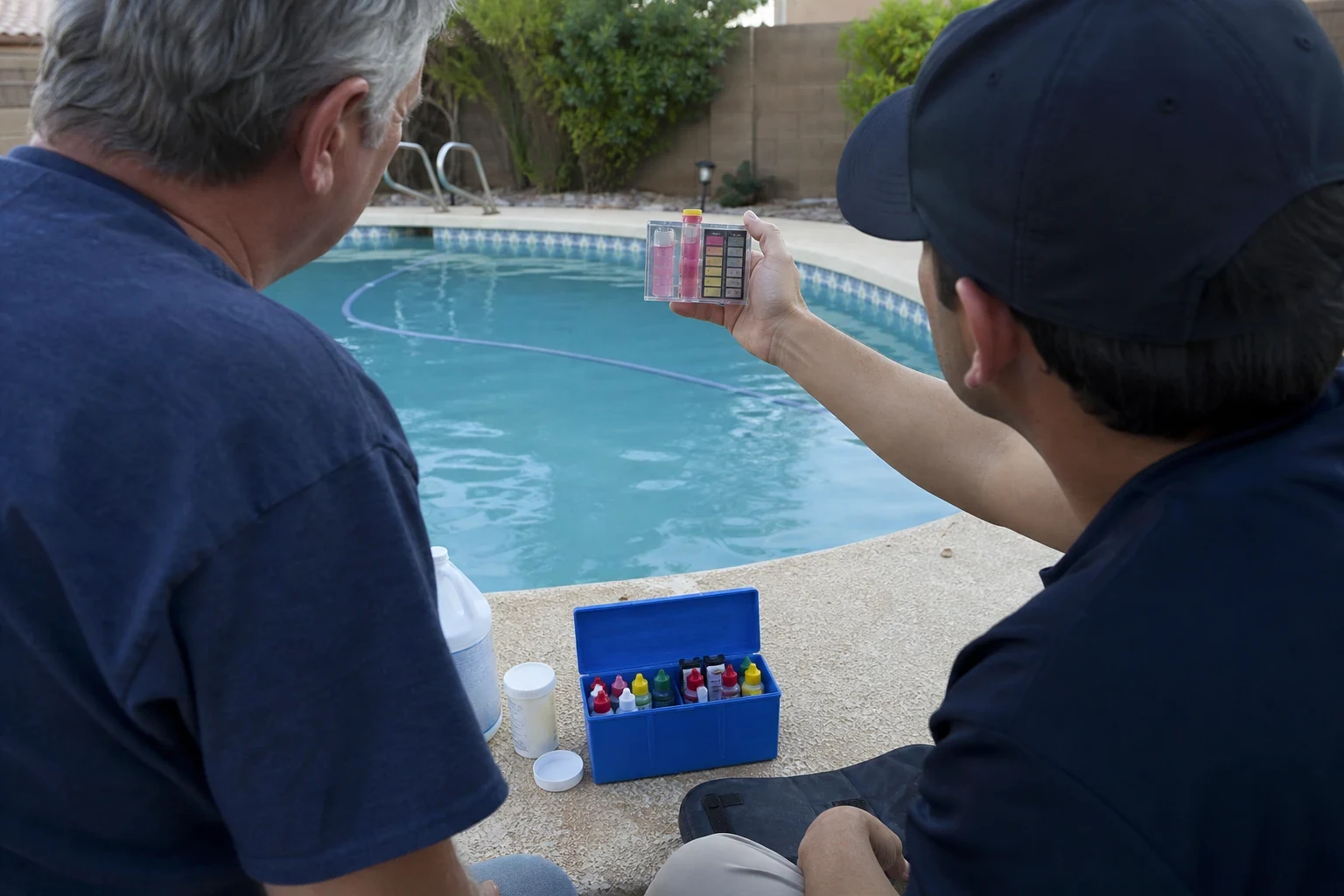
When Your Filter Is Due
- The gauge reads high
- Most filters are due once the gauge sits about 8 to 10 psi over its clean number. If you never noted a clean reading, a gauge that keeps rising tells you the same thing.
- Returns feel weak
- When water coming back into the pool barely pushes, the filter may be choking off the flow.
- Hazy water despite good readings
- The chemistry tests fine, yet the water stays cloudy. A full filter can no longer trap the fine particles.
- More pump hours for the same water
- If you keep adding timer hours just to hold the water clear, the filter is probably the choke point. Those extra hours land on your power bill.
- Right after a dust storm or algae bloom
- Monsoon dust and dead algae clog a filter quickly. Cleaning it after either one gets the system back to normal faster.
What Happens on the Visit
- 1
Power off and pressure released
We switch off the pump, shut any valves you have and open the air relief so the tank can be opened safely.
- 2
Media comes out
We take off the clamp or lid and pull the cartridges or grids, or check the sand. Everything gets a look on the way out so we can show you any worn or broken parts.
- 3
Cleaning and inspection
Cartridges and grids are washed and soaked if needed, and O-rings are cleaned and lubed. If something is torn, cracked or worn out, you hear about it before we replace anything.
- 4
Back together and running
We reassemble the filter, prime the pump, bleed out the air and look for drips. Then we note the clean pressure reading and hose off the equipment pad on our way out.
What Moves the Price
Filter cleaning is priced by the job, and a few things change how long that job takes. We will tell you the price on the phone or after a quick look, before we start. If we find a worn part, you hear about it first and decide.
- Filter type
- A single-cartridge filter is the quickest. DE filters take longer because every grid comes out and the system needs fresh powder after.
- How dirty it is
- A filter that has gone a long time, or one packed with algae or oils, needs a chemical soak instead of just a rinse.
- Parts that need replacing
- Torn grids, cartridges that have lost their shape, old sand or a cracked O-ring add parts cost. We show you what we found so you can see why.
- Access to the equipment
- Tight side yards or equipment tucked behind walls can add a bit of time to the visit.
Common Filter Questions
- How often does my filter need cleaning?
- That depends on the filter, how much you swim and how much dust and debris get in. Lots of cartridge and DE filters need a full cleaning two or so times a year, and more during dusty months. Go by the pressure gauge: once it reads 8 to 10 psi above the clean number, it is due.
- Does a clean filter actually cut my power bill?
- It can. A dirty filter makes the pump strain, and people often run it longer to keep the water clear. Clean media lets water pass more easily, so shorter run times may work. The savings depend on your pump and how clogged the filter was.
- Why not just backwash or hose it off myself?
- Backwashing and rinsing between cleanings help, and you should do them. They just don't clear out oils, scale and debris packed deep in the media. Taking the filter fully apart also lets us find a torn grid or cracked O-ring before it becomes a problem.
- When should a cartridge be replaced, not cleaned?
- Torn fabric, flattened pleats or cracked end caps can't be fixed with cleaning. A cartridge that still looks dirty right after a good soak is worn out too. We will show you and tell you honestly either way.
- Does weekly service include filter cleaning?
- Weekly Pool Cleaning tracks filter pressure and covers routine upkeep. A full teardown is a separate job we book when the filter calls for it. Ask about it when you call for your quote.
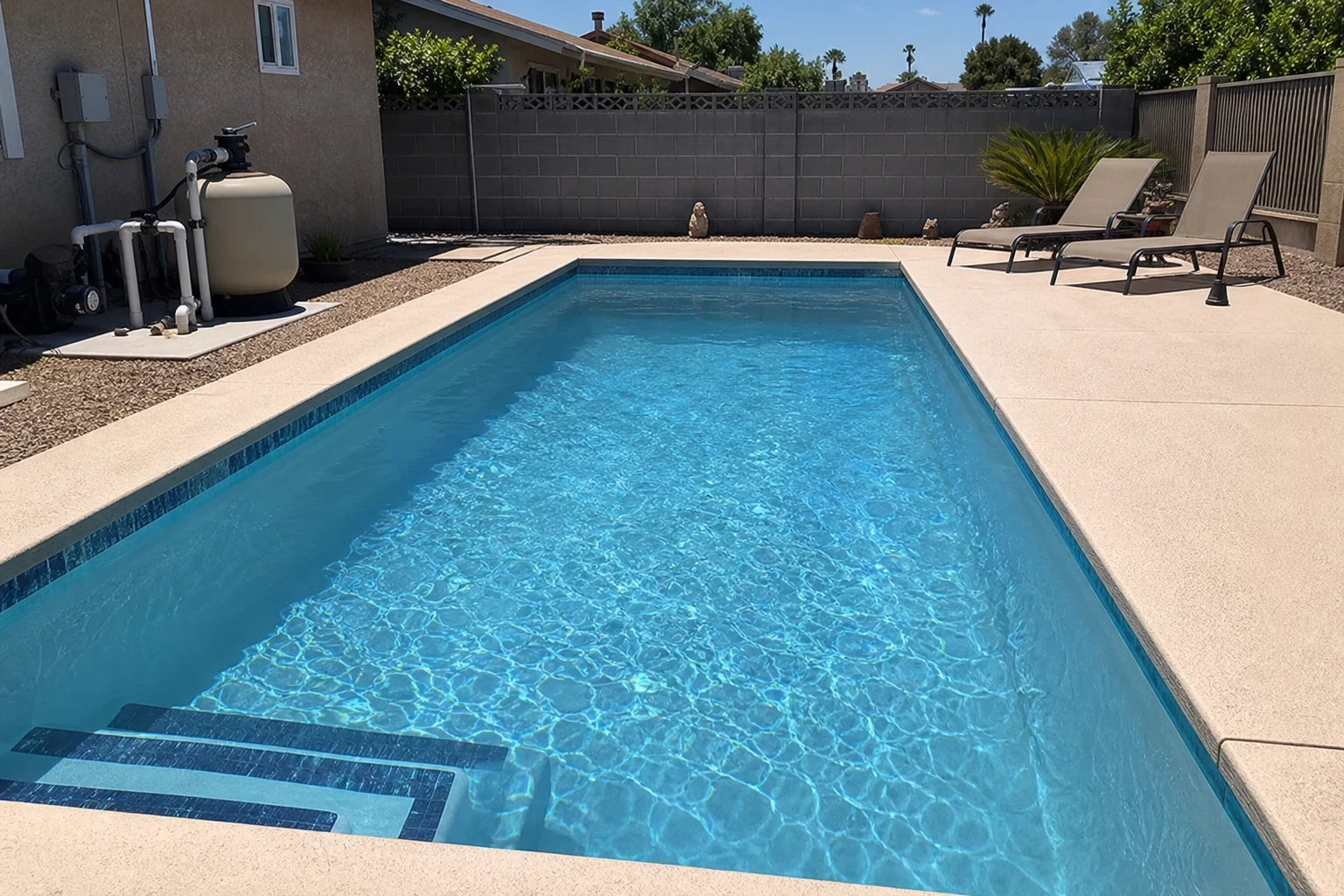
Give Your Pump a Break
Let us know your filter type and the reading on the gauge. You get a plain price and a time that fits your schedule.